
In this article:
Corporate social responsibility used to be a fairly low-stakes exercise. A company published an annual report, funded a cause aligned with its brand, and moved on. In 2026, that model is failing on two fronts at once. Regulators, after a decade of steadily expanding disclosure requirements, are now pulling back sharply on both sides of the Atlantic. And consumers, who spent the last several years rewarding companies for visible values, have become considerably more skeptical of whether those values are real. Together, these two shifts are changing what credible corporate responsibility actually requires, and the answer is not less rigor. It is more.
The Regulatory Story Is Retrenchment, Not Expansion
For years, the assumption in corporate responsibility circles was that mandatory disclosure requirements would only grow stricter. That assumption no longer holds. In the European Union, the Omnibus I directive, which entered into force in March 2026, substantially narrowed the scope of the Corporate Sustainability Reporting Directive. Reporting obligations now apply only to EU companies with more than 1,000 employees and over 450 million euros in net turnover, a significant increase from the original thresholds, alongside a roughly 70 percent reduction in the number of required data points under the simplified reporting standard. Companies that had already begun preparing for the original, broader requirements now find a meaningfully smaller set of obligations in front of them.
The shift in the United States has been more dramatic still. The SEC's climate-related disclosure rule, adopted in March 2024, was never actually enforced. It stayed within weeks of adoption, the agency withdrew its own legal defense of the rule in March 2025, and in 2026 the Commission formally proposed to rescind it entirely. For public companies in the United States, the practical driver of climate disclosure has shifted away from federal mandate and toward state-level rules, particularly California's SB 253 and SB 261, which now carry the operative reporting deadlines that the federal rule never did.
None of this means the underlying expectations from investors, employees, and business partners have disappeared. It means the compliance floor has dropped in some jurisdictions at the same time that voluntary expectations have kept climbing, which puts more weight on organizations choosing to hold themselves to a standard rather than assuming one will be imposed on them.
Consumers Want to Believe You, and Increasingly Do Not
The consumer-facing side of this story has its own tension. Edelman's 2025 Brand Trust research found that 64 percent of people buy, choose, or avoid brands based on their beliefs about what is happening in society, a figure that has climbed steadily for over a decade. Historical tracking from Ipsos, cited by the World Economic Forum, shows consumer preference for value-aligned brands in the United States rising from roughly 50 percent to 66 percent between 2013 and 2021 alone.
At the same time, skepticism about whether companies actually mean what they publish has grown just as fast. Recent industry survey data found that 72 percent of consumers believe companies overstate their sustainability efforts, and in a separate Harris Poll survey commissioned by Google Cloud, 58 percent of executives across 16 countries admitted their own organization had overstated its sustainability progress. Read together, these numbers describe an audience that wants to reward genuine commitment and is actively looking for reasons to distrust anything that looks like marketing dressed as responsibility. A CSR program built around a single glossy annual report is now more likely to be read as evidence of the problem than a credible response to it.
Why One-Off Campaigns Do Not Hold Up Anymore
Against that backdrop, the traditional CSR model, a designated theme for the year, a campaign, a report, and a quiet handoff to the next initiative, is a poor fit for both the regulatory environment and the audience it is meant to satisfy. Global challenges like plastic pollution, unequal access to healthcare resources, biodiversity loss, and the environmental footprint of digital infrastructure are continuous problems. A program that revisits them once and moves on cannot produce measurable change, and an increasingly skeptical audience has little patience for initiatives that look like a box being checked once a year.
Four Problems Where the Data Is Genuinely Instructive
Several of the issues that recur most often in serious CSR programs are worth understanding on their own terms, independent of any specific company's response to them.
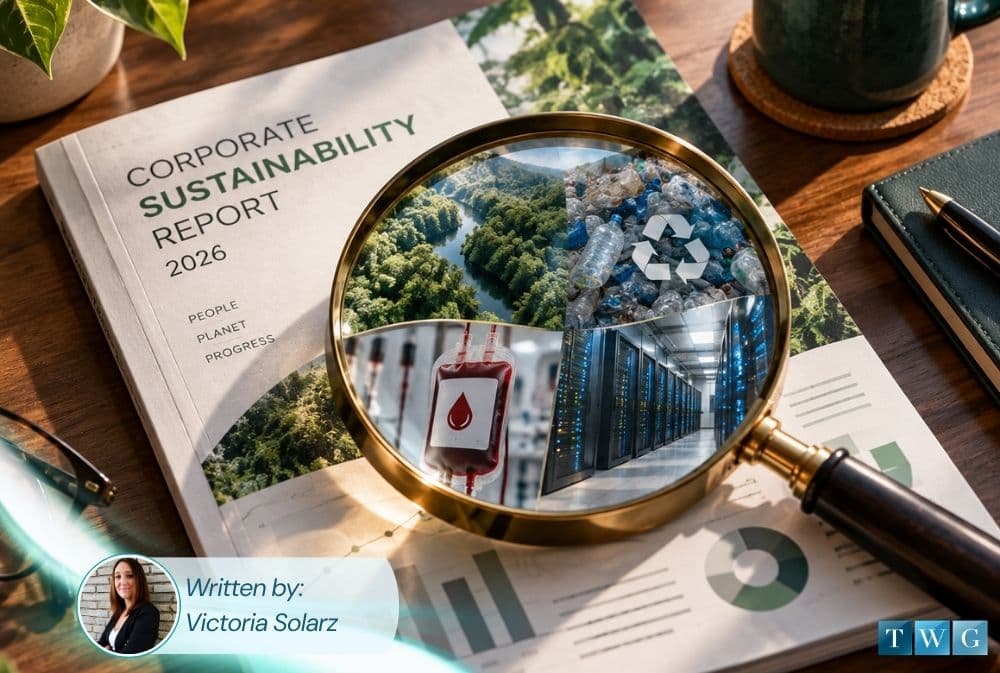
Plastic waste remains enormous in scale: the United Nations Environment Program estimates around 400 million tons of plastic waste generated globally each year, with 19 to 23 million tons leaking into aquatic ecosystems annually. The more useful question for most organizations is not whether plastic is good or bad in the abstract, but where unnecessary consumption is happening in their own operations and where a better choice is genuinely available.
Blood access remains sharply unequal. The World Health Organization's most recent global status report found roughly 120 million blood donations collected worldwide in 2023, with high-income countries, home to only 15 percent of the global population, collecting 36 percent of that total. Voluntary, unpaid donation now accounts for over 85 percent of the global supply, real progress, but the access gap between high- and low-income countries remains largely unchanged.
Forests continue to shrink, though more slowly than in past decades. The Food and Agriculture Organization estimates global forests cover approximately 4.14 billion hectares, about 32 percent of the world's land area, with average net forest loss of roughly 4.12 million hectares per year between 2015 and 2025.
Digital infrastructure has a real, physical environmental cost that is easy to overlook. The International Energy Agency estimates data centers consumed around 415 terawatt-hours of electricity in 2024, about 1.5 percent of global electricity consumption, with demand projected to more than double to roughly 945 terawatt-hours by 2030. Moving something from paper to a screen reduces one form of consumption while increasing another, rather than eliminating impact altogether.
What This Means for How Executives Should Run CSR
Put together, the regulatory retrenchment and the consumer skepticism point toward the same operating requirement: treat corporate responsibility with the same rigor applied to any other strategic function, rather than as a communications exercise that happens to have a charitable component. That means grounding commitments in verifiable data rather than aspirational language, maintaining programs continuously rather than rotating through themes annually, being specific about what has and has not improved, and being willing to say a problem is still largely unsolved rather than implying otherwise. In an environment where more than half of surveyed executives privately admit to overstating their own organization's progress, the organizations that stand out will be the ones willing to be precise about what they have actually achieved and what remains open.
TalentWorldGroup's Own Answer to This
TalentWorldGroup's own response to this shift is Impact Lab, a long-term CSR initiative built around four recurring areas: plastic reduction, blood donation, forests and biodiversity, and paperless and digital sustainability. Rather than moving from one theme to the next and never returning to it, Impact Lab revisits each pillar throughout the year, which is close to the continuous, evidence-based structure this piece argues the current moment requires.
About the Author
Victoria is a native English and Spanish speaker with around 20 years’ experience across customer service, hospitality, holiday rentals, administration and translation. Originally from the UK and now based in Europe, she enjoys solving problems, supporting people and bringing calm to the occasional bit of chaos. Outside work, you’ll usually find her exploring nature, gaming, painting Warhammer, riding motorbikes or serving the every whim of her very spoilt cat.
Share this article


Stay in the know
Discover more articles, explore emerging trends, and stay connected with the future of remote work, global recruitment, and business process outsourcing by staying informed with the latest industry news, expert perspectives, and insights from TalentWorldGroup.